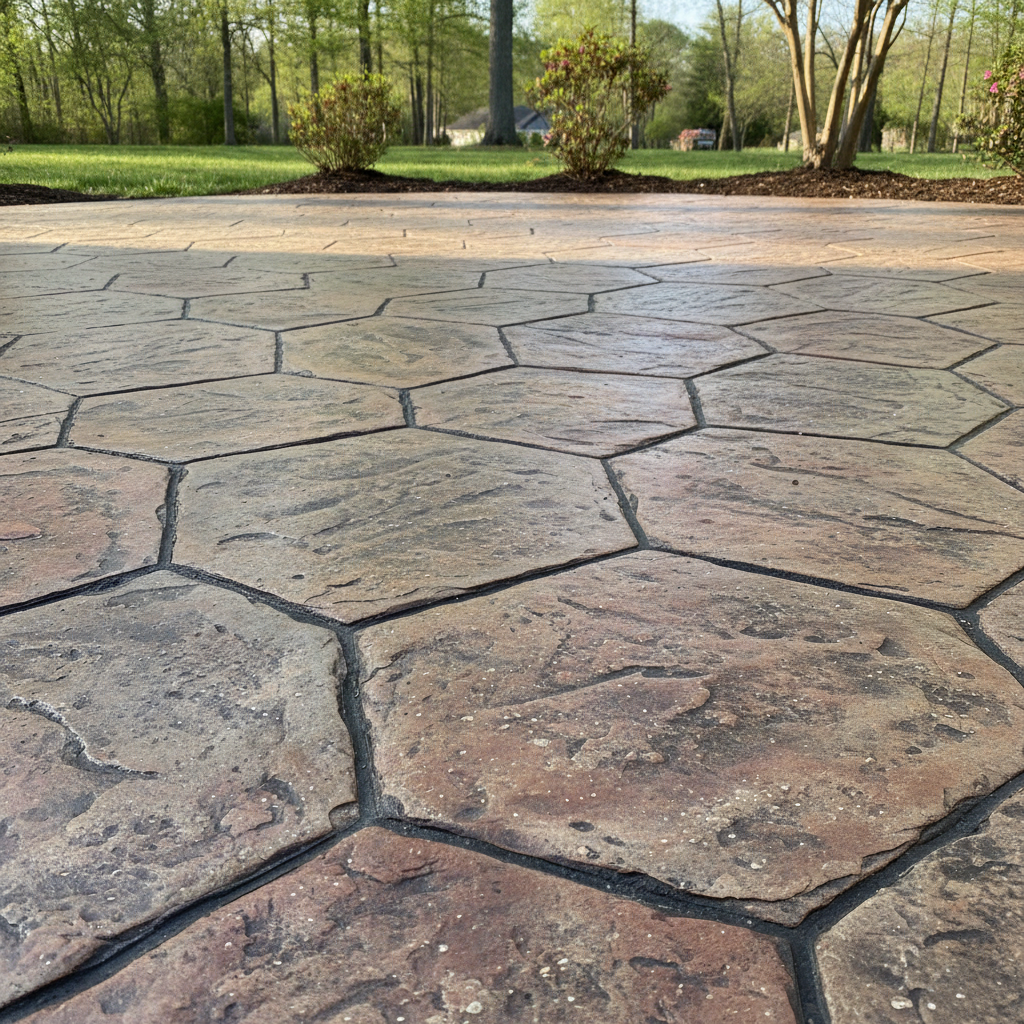
Ever look at a plain gray concrete slab and wish it had a bit more character? Staining, stamping, and scoring can completely change the look of your outdoor spaces without costing as much as natural stone. If you live around Old Towne or out near Walnut Hill, you have probably noticed historic brickwork and charm everywhere. Your concrete does not have to look boring by comparison. Genesis Concrete Co talks to homeowners every week who want to upgrade their patios, walkways, or pool decks. But before you grab a trowel or call a crew, you need a solid plan for how these projects actually work from start to finish.
Before the Work Begins: Planning and Prep
Getting ready is ninety percent of the battle with any masonry work. In our part of Virginia, we deal with heavy red clay soils that expand when they get soaked and shrink when they dry out. If you ignore what is under your subgrade, your brand-new decorative patio is going to crack and shift within a couple of winters. You have to figure out what you can handle yourself. Staining an existing, cured slab with a chemical acid stain is a totally doable weekend project if you are patient with pressure washing, scrubbing, and neutralizing. But tearing out old concrete, fixing drainage issues, grading the earth, and pouring a fresh decorative pad is a much bigger undertaking. If you are doing a full install with stamped patterns, you need precise timing and heavy-duty equipment. Renting a mixer and trying to hand-screed a large area by yourself usually ends in a sloppy mess that cures before you get the pattern rolled in.
During the Pour: Execution and Timing
When installation day arrives, things move fast. There is no hitting pause once that truck starts rolling down your driveway. If you hired pros, you will see Genesis Concrete Co setting forms, checking slope so water drains away from your foundation, and pouring the mix. Then comes the artistic part. Coloring agents go in, release powders get broadcasted, and stamping mats get walked systematically across the surface to mimic slate, flagstone, or wood planks. If you are attempting a smaller decorative resurfacing job yourself, such as applying a thin polymer overlay to an old porch, you have to work in small sections. The humidity we get around Petersburg in the summer will flash-cure concrete products before you even finish troweling them out. Keep a helper nearby to mix product while you apply it, and do not bite off more square footage than you can realistically finish in twenty minutes.
After the Cure: Sealers and Upkeep
Once the concrete hardens and the decorative cuts are made, your job shifts to protection. You cannot just walk away and forget about it. Decorative concrete needs a quality sealer to keep the colors vibrant and to block moisture from seeping into the pores. Petersburg weather throws everything at us, from freezing winter sleet to baking July sunshine. Reapplying a solvent-based or water-based acrylic sealer every two to three years keeps moisture out and stops freeze-thaw damage in its tracks. Wash it down with a mild detergent in the spring, keep leaves from sitting too long in the fall, and your decorative surfaces will stay sharp for decades.