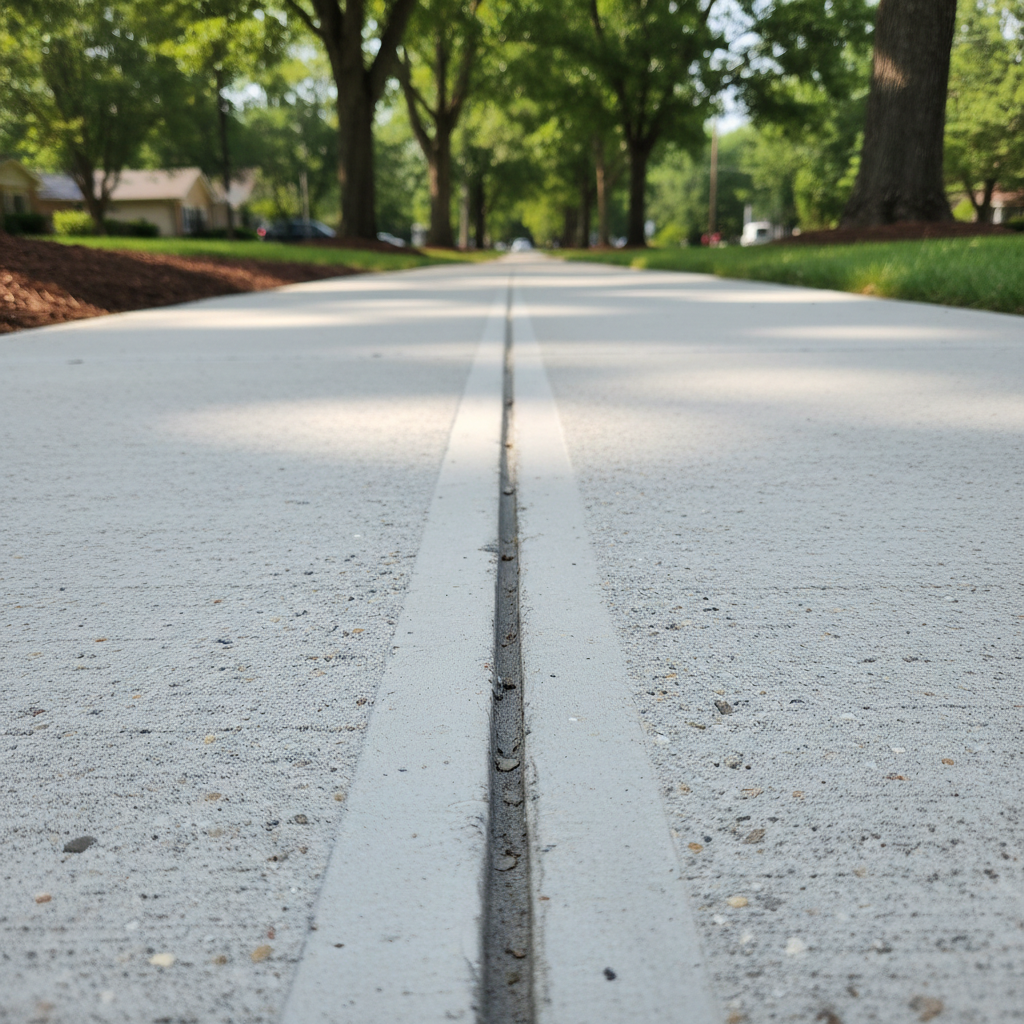
Planning Your Petersburg Concrete Sidewalk
So, you're thinking about a new concrete sidewalk, or maybe fixing up an old one around your place here in Petersburg. Good call, really. A solid sidewalk not only looks good but keeps folks safe and adds value to your home. Before you even think about mixing cement, you've got to plan. And I mean *really* plan.
First, figure out the path. Where's it going? How wide does it need to be? Most residential sidewalks are at least 3 feet wide, but if you're planning on two people walking side-by-side comfortably, you might want 4 feet. Think about drainage too. You don't want water pooling on your new path, especially with our clay soils around here. A slight slope, maybe 1/4 inch per foot, is usually enough to shed water away from your house or foundation.
Next, permits. Don't skip this part. Depending on where your sidewalk is going and how big it is, you might need a permit from the city. Getting caught without one is a hassle, trust me. A quick call to the Petersburg Department of Planning and Community Development can save you a big headache later.
Now, the big question: DIY or hire a pro? For a small, straightforward path, like a short walkway to a shed, you *might* be able to do it yourself. But if we're talking about a long sidewalk, one that connects to the street, or has curves and steps, you're probably better off calling someone like us at Genesis Concrete Co. Concrete work is heavy, precise, and unforgiving. Once it's poured, well, it's poured.
Getting Ready for the Pour
If you're going the DIY route for a small project, here's what you'll need to do before the concrete even shows up. You've got to excavate. Dig out the path to the right depth – usually 4-6 inches for the concrete itself, plus another 4-6 inches for a gravel base. That gravel base is crucial, especially with our freeze-thaw cycles. It helps with drainage and prevents the concrete from cracking when the ground moves.
Then you need to build your forms. These are the wooden or metal frames that hold the wet concrete in place. They need to be sturdy, level, and staked securely. Any wobble here, and your sidewalk won't be straight or flat. You'll also want to lay down a vapor barrier – a thick plastic sheet – over your gravel base. This stops moisture from wicking up into the concrete.
Think about reinforcement too. For most sidewalks, rebar or wire mesh isn't strictly necessary for strength, but it certainly helps control cracking. If you're in a high-traffic area or have questionable soil conditions, it's a good idea.
During and After the Concrete Pour
This is where things get fast and furious. If you're doing it yourself, make sure you have enough help. Concrete waits for no one. You'll need to pour, spread, screed (level), float (smooth), and then finish the surface. The timing is critical for each step. Too early or too late, and you won't get a good finish. You'll want a slight broom finish for traction, especially since we get some icy patches here in the winter.
Once it's poured and finished, the work isn't over. Curing is just as important as the pour itself. Concrete doesn't just dry; it cures. This is a chemical process that needs moisture. You'll want to keep your new sidewalk damp for at least 7 days, sometimes longer. You can use a curing compound, or just cover it with plastic and mist it occasionally. Don't let it dry out too quickly, or you'll end up with a weak, cracked surface.
And whatever you do, stay off it! For at least 24-48 hours for light foot traffic, and a week or more before you put anything heavy on it. Full strength takes about 28 days. Be patient. You've put in all that hard work; don't ruin it at the finish line.
Look, concrete work is tough. It's physically demanding, and there's a lot of skill involved to get it right. If you're feeling overwhelmed, or if your project is anything more than a small, simple slab, don't hesitate to call in the pros. We do this every day, and we've got the tools and the know-how to get it done right the first time. Give Genesis Concrete Co a call; we're always happy to talk through your project.