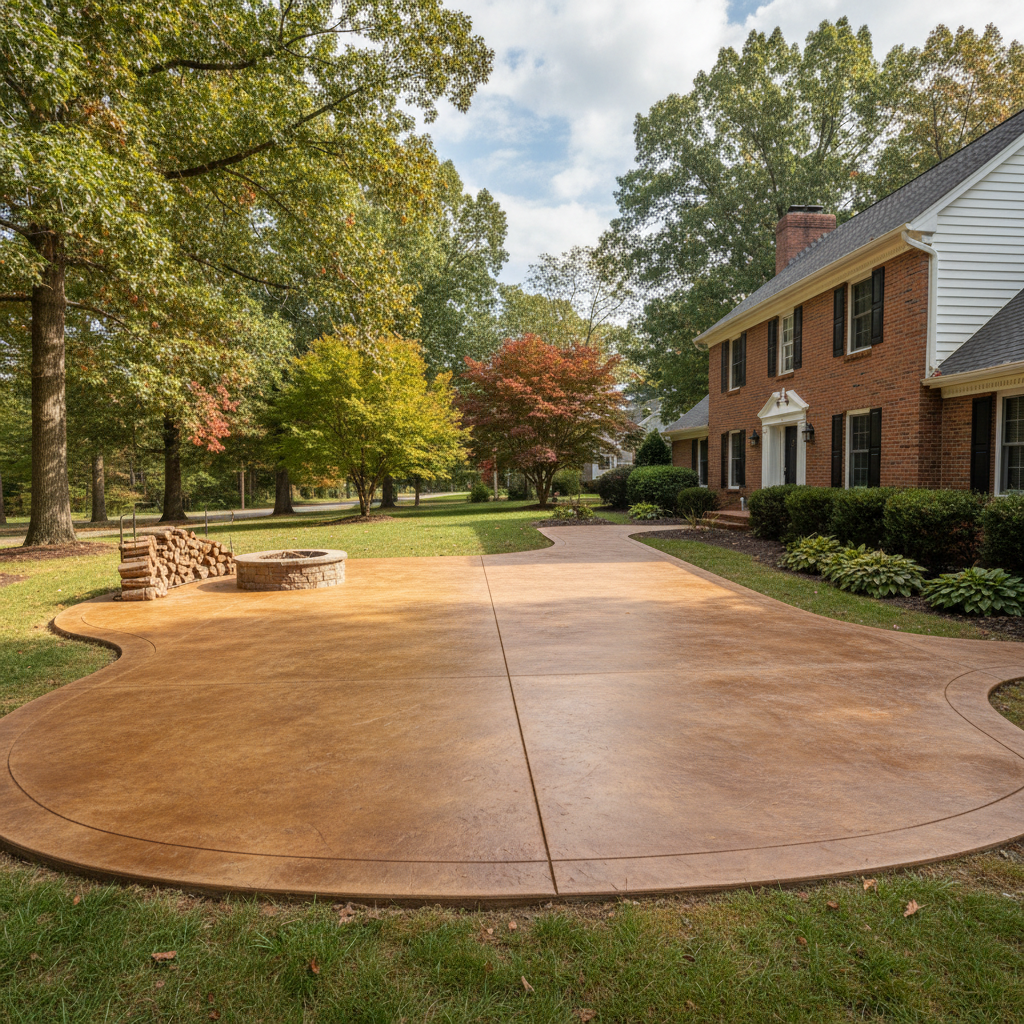
You love your stained concrete, right? Whether it’s an indoor floor or an outdoor patio, that rich, custom color adds a lot of character. But like anything good, it needs a little looking after to keep it that way. Especially here in Petersburg, where our weather can be pretty tough on surfaces.
Extending the Life of Your Stained Concrete
The biggest thing you can do to protect your stained concrete is proper sealing. When we finish a staining job at Genesis Concrete Co., we always apply a high-quality sealer. That sealer is your first line of defense against everything from spills to UV rays to foot traffic. Think of it like sunscreen for your concrete.
For outdoor surfaces, especially those exposed to the elements like a backyard patio in Walnut Hill, you'll want to reseal every 2-3 years. Sometimes even sooner if it sees a lot of heavy use or gets direct, intense sunlight all day. Inside, it might last 5 years or more, depending on traffic. How do you know if it needs resealing? We'll get to that with warning signs, but generally, if water isn't beading up on the surface anymore, it's time.
Another big one is mats. Use doormats at entries, especially if you've got kids or pets tracking stuff in. For outdoor furniture, put felt pads or rubber caps on the legs. Anything that can scratch or gouge the surface should be avoided. Don't drag heavy items across it. Lift, don't slide.
Regular Maintenance: What You Need to Do
This isn't rocket science, folks. Most of it is pretty straightforward:
- Sweep or vacuum regularly: Dirt and grit are abrasive. They act like sandpaper, slowly wearing down your sealer and even the stain itself. Get rid of it.
- Mop with a mild cleaner: For indoor floors, a pH-neutral cleaner is your best friend. Avoid harsh chemicals like ammonia, bleach, or anything acidic. Those will strip your sealer faster than you can say “oops.” Warm water and a little dish soap often do the trick.
- Hose down outdoor surfaces: For patios and driveways, a good rinse with a garden hose can remove most loose debris. For tougher grime, a pressure washer on a low setting (no more than 1200-1500 PSI) can work, but be careful not to hold it too close or blast away the sealer.
- Clean spills immediately: Especially for things like oil, grease, wine, or anything acidic. The longer it sits, the more likely it is to penetrate the sealer and leave a permanent mark.
Remember, the goal is to keep that sealer intact. It's doing the heavy lifting to protect your beautiful stain.
Warning Signs of Problems
Your concrete will tell you when it needs attention. You just have to know what to look for:
- Dullness or fading: If your vibrant color starts looking muted or patchy, especially in high-traffic areas or sun-exposed spots, your sealer is likely wearing thin.
- Water absorption: This is a big one. Pour a little water on the surface. If it soaks in and darkens the concrete instead of beading up, your sealer is gone. You're exposing the bare concrete and stain to damage.
- Scratches and abrasions: Small scratches are normal, but if you're seeing a lot of them, or if they're deep enough to show the unstained concrete underneath, you've got a problem.
- Peeling or flaking: This usually means the sealer wasn't applied correctly in the first place, or it's just completely failed. This is more common with lower-quality sealers or if the surface wasn't prepped right.
- Stains that won't come out: If you're cleaning regularly but still getting stubborn stains, your sealer isn't protecting like it should.
Don't ignore these signs. A small issue can quickly become a big, expensive repair if left unchecked.
When to Call a Professional
Look, a lot of this maintenance you can handle yourself. But there are times when it's best to bring in the pros, like us at Genesis Concrete Co. You should definitely give us a call if:
- You're unsure about resealing: Choosing the right sealer and applying it correctly is crucial. There are different types for different applications and conditions. If you're not confident, don't risk it.
- You have significant damage: Deep scratches, widespread peeling, or extensive fading might require more than just a simple reseal. We can assess the damage and recommend the best course of action, which might involve stripping the old sealer, re-staining, and then resealing.
- You're dealing with persistent staining or efflorescence: Sometimes, even with a good sealer, you might get mineral deposits (efflorescence) or stains that just won't budge. We have specialized cleaners and techniques to tackle these.
- You want to change the look: Maybe you're tired of the color or want to add a different finish. That's a job for a professional.
Taking care of your stained concrete isn't just about making it look good; it's about protecting your investment. A little effort goes a long way in keeping those beautiful colors vibrant for years to come, even with our hot, humid Virginia summers and chilly, damp winters.