What's the real cost of a concrete patio around Petersburg?
Alright, let's get straight to it. This is usually the first thing folks ask, and it's a fair question. The cost of a concrete patio isn't a one-size-fits-all number, not by a long shot. You're looking at a range, typically from $6 to $15 per square foot, sometimes more for really intricate stuff. What drives that price? A few big things.
First, size. Bigger patio, more concrete, more labor. Simple math. Second, preparation. Is the ground already level? Do we need to do a lot of excavation, or clear out old pavers? That adds time and cost. Third, and this is a big one, what kind of finish do you want? A basic broom finish is the most economical. But if you're dreaming of stamped concrete that looks like stone or brick, or exposed aggregate, those techniques require more skill, more materials, and more time. Stamping, for example, involves special tools and a lot of careful work to get that realistic texture. Then there's color – integral color costs more than a topical stain. Don't forget about access to the site either. If we can't get a concrete truck right up to the spot, we might need to use wheelbarrows or a pump, and that's extra labor.
How long does a concrete patio last in our Virginia climate?
A well-installed concrete patio, done right from the start, should easily give you 20 to 30 years of service, and often more. I've seen patios around Petersburg, even some in older neighborhoods like Pecan Acres, that are pushing 40 years and still holding up. The key is in the installation. You need proper sub-base preparation – compacted gravel or crushed stone is essential to prevent settling and cracking. The concrete mix itself matters too; you want the right strength for our climate, which means a good quality mix that can handle our freeze-thaw cycles. And proper curing is non-negotiable. If you skimp on any of these steps, you're just asking for trouble down the road. Genesis Concrete Co. always makes sure we're doing it by the book, because we want your patio to last.
Will my concrete patio crack? How do I prevent it?
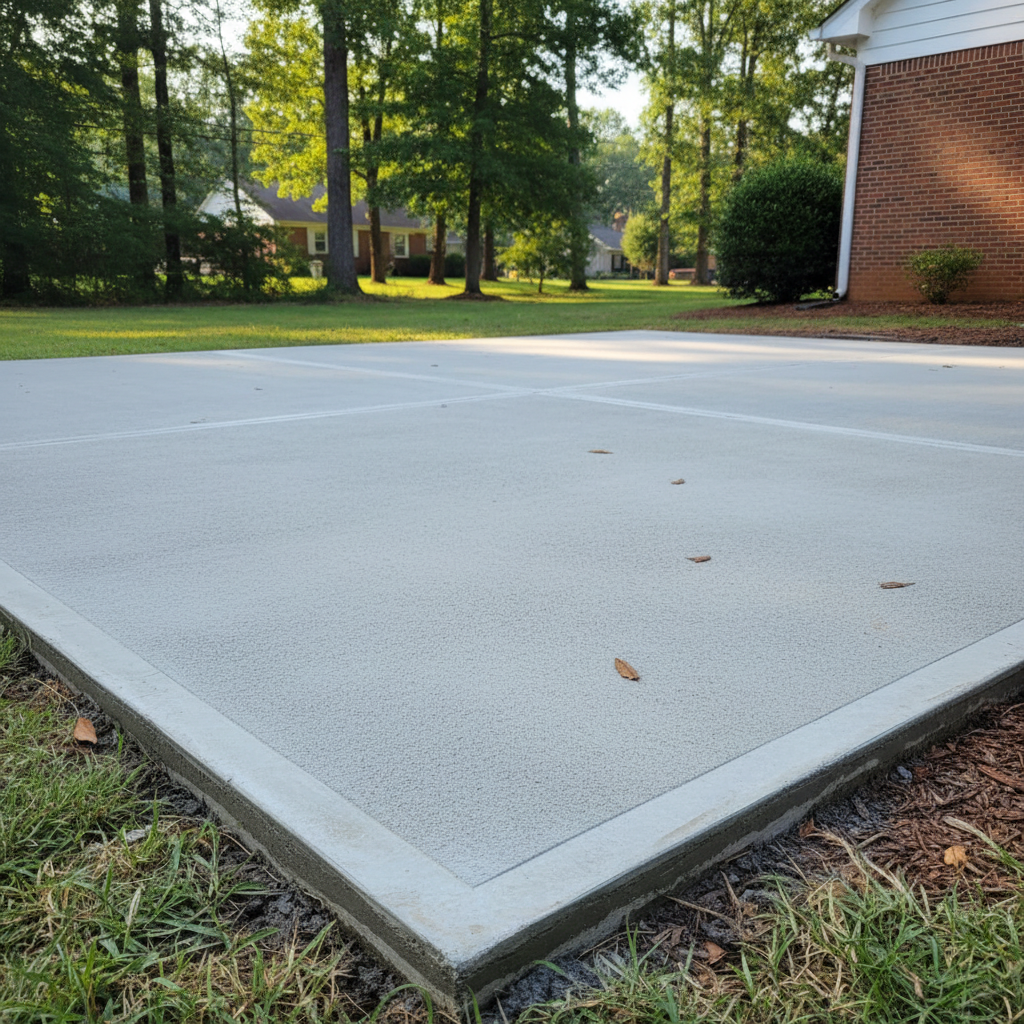
Look, anyone who tells you concrete won't crack is either lying or doesn't know concrete. Concrete cracks. It's a natural characteristic of the material as it cures and expands/contracts with temperature changes. The goal isn't to prevent all cracks, it's to control where they happen. That's where control joints come in. We saw or tool grooves into the fresh concrete, usually about a quarter of the slab's thickness. These joints create weakened planes, so when the concrete inevitably cracks, it does so along those lines, making them much less noticeable and structurally insignificant. Proper spacing of these joints is crucial; too far apart, and you'll get random cracks. We also reinforce with rebar or wire mesh, especially for larger slabs, to add tensile strength and help hold any cracks tightly together. Good drainage around the patio is also important to prevent water from undermining the slab.
Can I really clean and maintain a concrete patio myself?
Absolutely, you can. Concrete patios are pretty low maintenance, which is one of their big selling points. For general cleaning, a good sweep and a hose with a little dish soap and a stiff brush usually does the trick. For tougher stains, you might need a pressure washer, but be careful not to use too high a pressure, especially on stamped or stained concrete, as you can damage the finish or blow out the aggregate. Start with a wide fan tip and lower pressure. For oil or grease, a degreaser formulated for concrete works well. Sealing is the most important maintenance step. You should reseal your patio every 2-5 years, depending on traffic and exposure to the elements. This protects it from stains, UV damage, and moisture penetration, making it easier to clean and extending its life. It's not a hard job, just takes a little time.
What's the deal with stamped concrete vs. regular concrete?
Okay, so 'regular' concrete, usually what we call broom finish, is exactly what it sounds like – a smooth, slightly textured surface created by dragging a broom across it. It's durable, cost-effective, and gets the job done. Stamped concrete, on the other hand, is all about aesthetics. We pour the concrete, add color (either integral or a surface color hardener), and then, while it's still wet, we press large, flexible mats into it that are molded to look like natural stone, brick, wood, or other patterns. It's a way to get the look of more expensive materials like flagstone or pavers, but with the durability and lower maintenance of concrete. It costs more upfront because of the specialized materials, tools, and the skilled labor involved in getting that realistic texture and consistent color. But for a lot of folks, the visual appeal is worth the extra investment, especially if you're trying to match your patio to your home's architecture or landscaping.
How long before I can use my new concrete patio?
This is a common question, and I get it – you want to enjoy your new space! Generally, you can walk on a new concrete patio within 24-48 hours. It'll be firm enough to support foot traffic. However, you really need to give it about 7 days before you start placing heavy furniture on it, and at least 28 days for it to reach its full design strength. That 28-day mark is when the concrete has completed the vast majority of its curing process. So, while you can carefully walk on it pretty quickly, don't plan your big backyard BBQ for the first weekend. Give it time to properly cure, and it'll serve you much better in the long run.